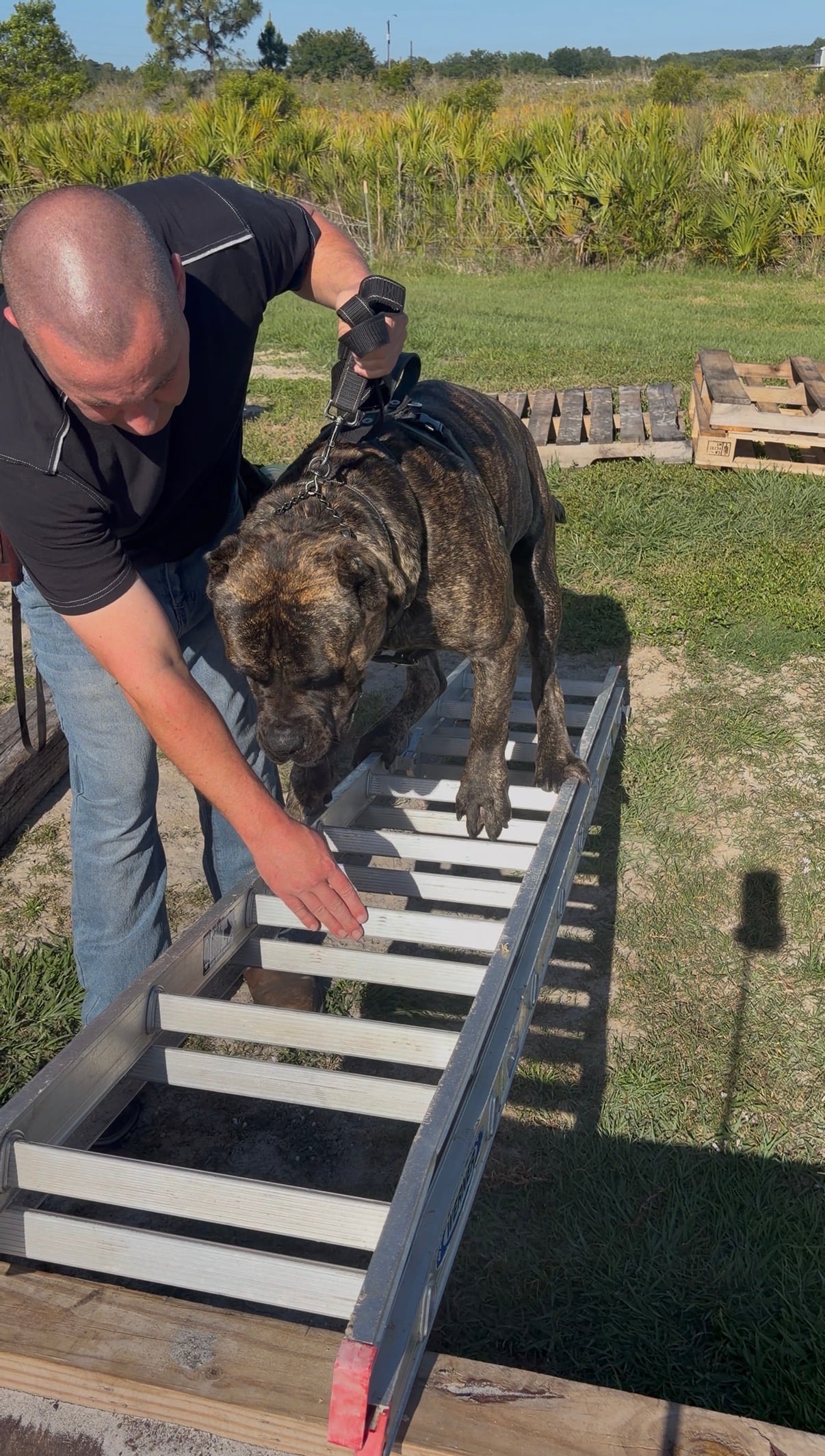
Preparing for a Cane Corso puppy
A Cane Corso is not a golden retriever. It is a guardian breed, and everything about how you raise one has to respect that. The work you do before the puppy comes home matters as much as the work after.
- By
- Robert LaPerriere Jr.
- Source
- Viking Prairie K9 field manuals
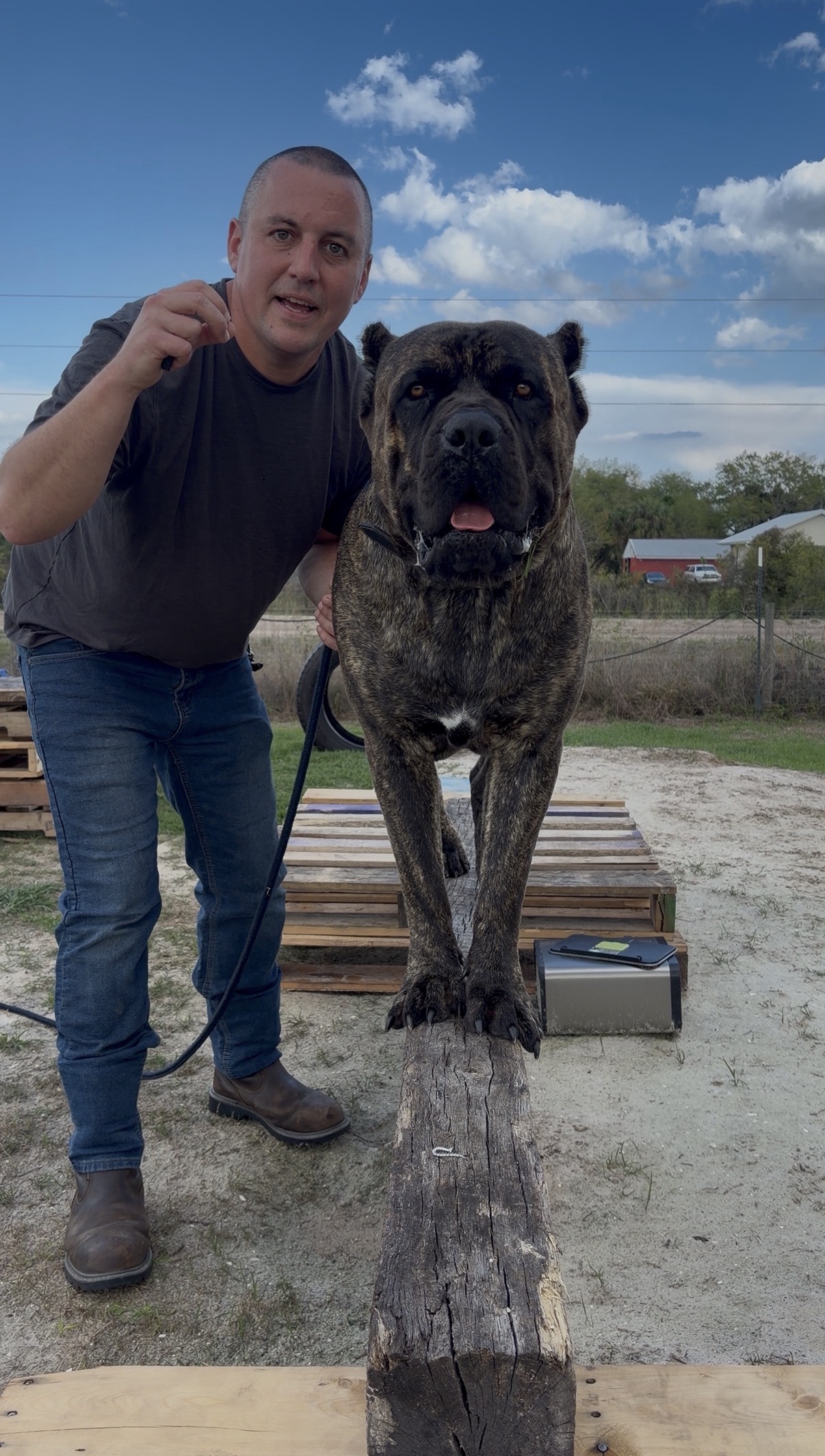
What makes a Corso different
- 01Guardian instincts show up early. Do not mistake normal puppy alertness for a formed temperament, but do not ignore it either.
- 02They bond hard to their family and can be wary of new people and dogs if not properly socialized.
- 03They learn a routine in days, which means bad habits form just as fast as good ones.
- 04Size comes fast, so equipment and rules need to scale with the dog.
- 05They are a working, thinking breed. Boredom and no structure become pushiness or destructive behavior.
Choosing a breeder
Speak with at least three breeders before deciding.
- 01A clean environment, and healthy, confident parents you can meet in person
- 02Hip and elbow testing, and cardiac clearance, on both parents
- 03Vet documentation on request, and a pedigree
- 04Lifetime support from the breeder
- 05Walk away if there is no health testing, no parents to see, no lifetime support, or puppies leaving before eight weeks
Before the puppy comes home
- 01A crate sized for the adult dog, with a divider for the puppy stage
- 02Equipment ready before day one, not ordered after
- 03A feeding plan, including a large-breed puppy formula
- 04A training plan in place before the puppy arrives
- 05Keep your real schedule. Do not take time off and create a temporary routine.
Growth and health
Giant breeds grow into their joints slowly. The first 18 to 24 months affect the dog's joints for life.
- 01No forced long-distance running on hard surfaces until growth plates close, closer to 18 months
- 02No repeated jumping on and off furniture, tailgates or high surfaces
- 03Use ramps and puppy stairs for the car and tall furniture
- 04Use structured obedience, not uncontrolled running, as the main outlet for energy in the first year
- 05See a veterinarian for limping, stiffness, or changes in appetite rather than guessing
Socialization comes first
A Cane Corso that is not properly socialized between eight and sixteen weeks of age carries that gap for life. Expose your puppy to new people on your terms, new places, new sounds, and calm vaccinated dogs in controlled settings.
You are the advocate. Not everyone gets to pet your puppy. You decide who approaches and when. The goal is calm, neutral and confident.
Questions
Common questions about this method.
Between eight and sixteen weeks of age. Robert calls it the most important part of raising a Corso, because a gap in that window is carried for life.
Not on hard surfaces until growth plates close, which is closer to 18 months. Short, structured obedience sessions burn energy without the strain on a growing body.
Robert advises keeping your real schedule. A puppy that learns your vacation schedule as normal will fight you when real life resumes.
Want the full system?
This guide covers the core. Preparing for Your Cane Corso Puppy goes further. The full guide covers breed understanding, breeders, home setup, equipment, growth and health, and socialization for a guardian breed.
Prefer hands-on help? Robert trains dogs in person, by video, and through Board & Train.
General education only, not veterinary or individualized behavior advice. Every dog is different and results vary. If your dog has bitten or shown aggression, work with a qualified professional first.
Get the free Field Manual
Not ready to buy? First name and email, and the free Field Manual is yours.
Want Robert to train your dog?
Private training, virtual coaching and Board & Train are all available. Tell Robert about your dog and your goals.